Latin manuscripts have remained inaccessible for centuries due to diverse handwriting styles and dense abbreviations. This article explains how Scripily's pre-trained AI models can automatically transcribe medieval and early modern Latin documents.
The thousand-year problem that refused to go away
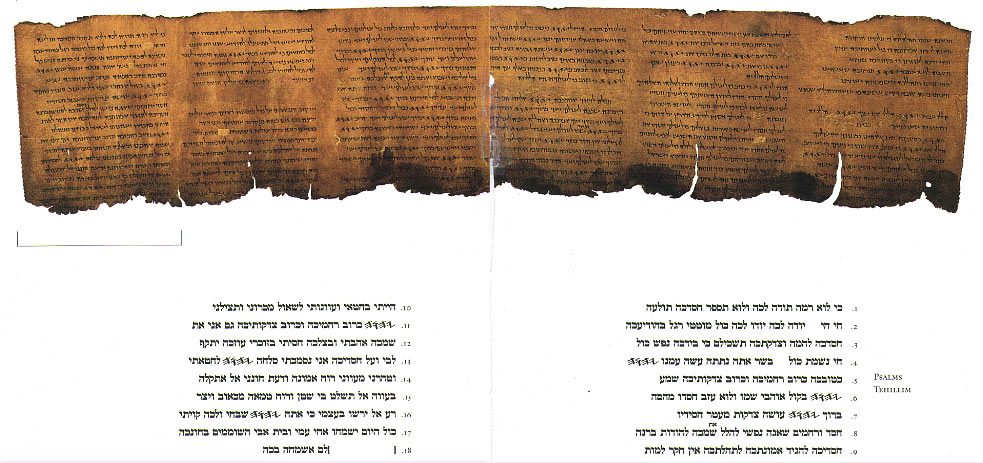
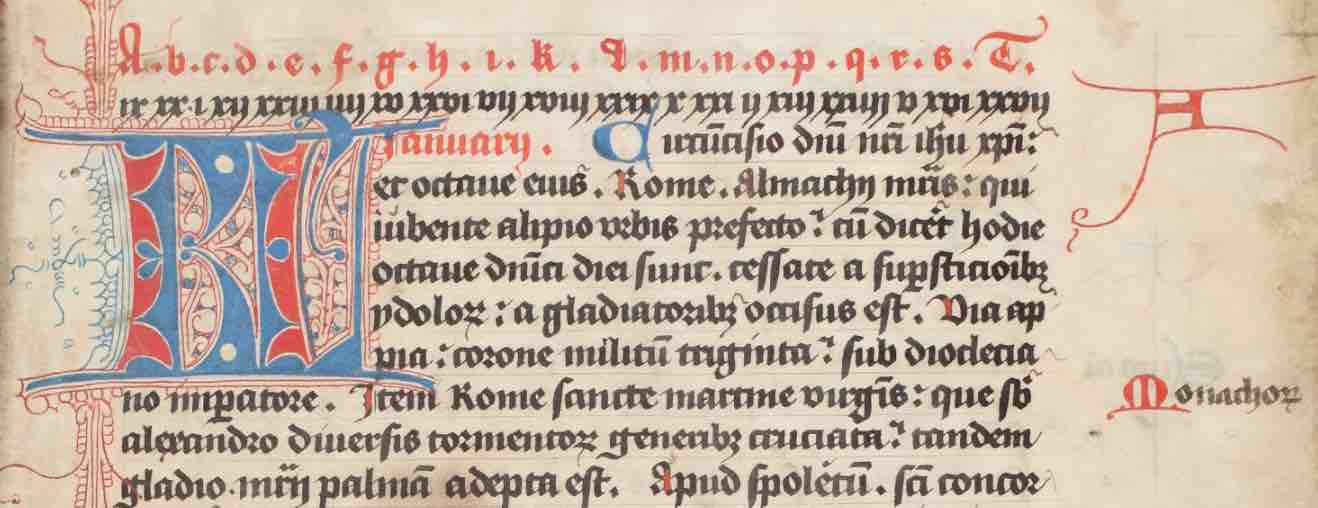
For more than a thousand years, Latin served as the universal language of law, liturgy, science, and diplomacy across Europe. The vast majority of historical documents held in archives, cathedrals, and university libraries from the early medieval period through to the eighteenth century are written in Latin, yet the sheer diversity of handwriting styles used to record that language has created a formidable barrier to access. Unlike printed books, which optical character recognition software has been able to process for decades, handwritten Latin manuscripts present a completely different challenge because every scribe wrote with a unique hand, and scripts changed dramatically across centuries. The neat, rounded letters of Carolingian minuscule from the ninth century bear almost no resemblance to the dense, angular strokes of Gothic blackletter from the fourteenth century, and neither looks like the flowing humanistic cursive that became popular during the Renaissance. On top of this, medieval and early modern scribes were notorious for their aggressive use of abbreviations, suspending words with all kinds of special marks and superscript symbols in order to save precious parchment and ink. A single line of text might contain half a dozen abbreviated forms, with a simple p with a line through the descender standing for per, prae, or even post depending on context, or a q with a superscript mark representing que or quoque. For scholars, archivists, and genealogists, manually transcribing these documents has traditionally meant years of paleographic training followed by painstaking, line-by-line work that might produce only a few pages of usable text per day.
Why you will never need to train an AI model yourself
The arrival of artificial intelligence applied to handwritten text recognition has fundamentally changed this reality, but there is a widespread misconception that using AI requires you to become a machine learning expert. Platforms like Scripily have completely eliminated this barrier by providing immediate access to dozens of pre-trained models that are ready to use right out of the box. You do not need to upload any training data, you do not need to draw bounding boxes around individual letters, and you do not need to spend weeks teaching a model to recognize a particular scribe's hand. Every single model available in Scripily's public library has already been trained by specialists using thousands of pages of meticulously transcribed ground truth data, and these models have been refined and tested across hundreds of different manuscripts to ensure they generalize well to material they have never seen before. All you need to do is upload your manuscript pages, select the model that best matches your document's script and time period, and let the AI produce a transcription. This approach puts advanced machine learning capabilities into the hands of researchers who may have no technical background whatsoever, and it means that even a complete beginner can open a manuscript from the twelfth century, run it through the appropriate model, and obtain a transcription that might be eighty, ninety, or even ninety-five percent accurate on the very first pass.
Matching your manuscript to the right pre-trained model
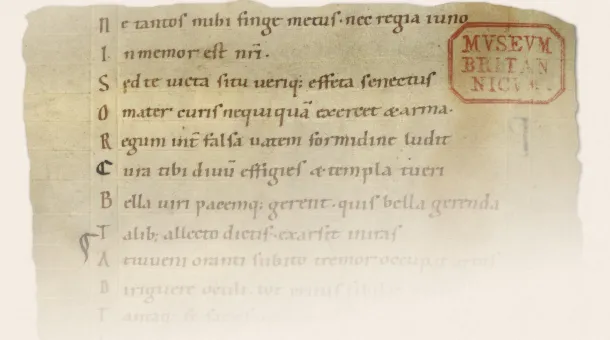
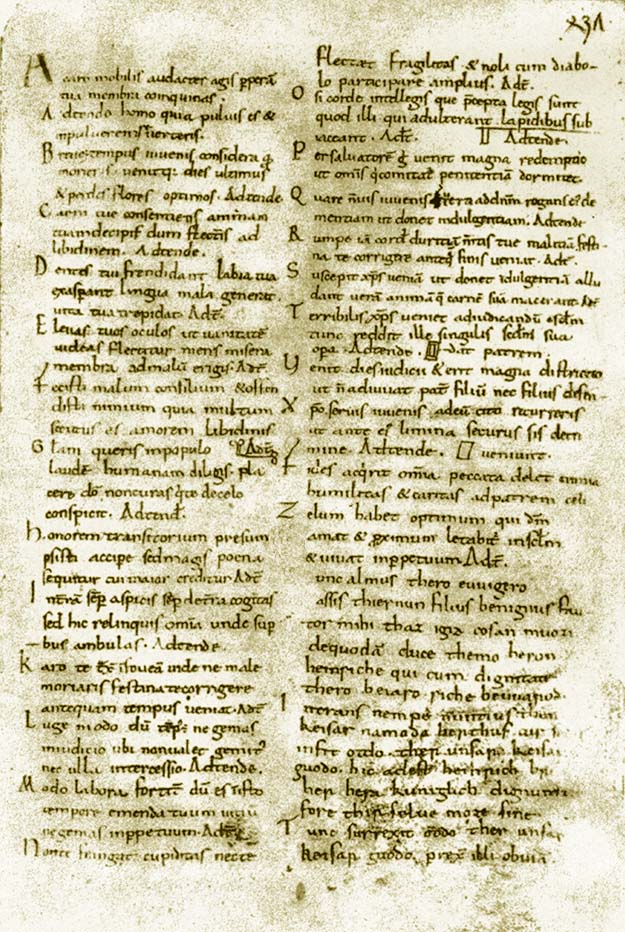
The key to success lies in matching your manuscript to the right pre-trained model, and Scripily's model library has been organized specifically to make this process intuitive even for users who cannot tell a Carolingian from a blackletter at first glance. For documents written in the clear, disciplined script that Charlemagne's scribes standardized across the Holy Roman Empire, the Carolingian Minuscule model is the obvious starting point, as it has been trained on dozens of complete ninth- to eleventh-century codices including Bibles, capitularies, and philosophical commentaries. This model excels at recognizing the distinctive letterforms that later became the basis for modern lowercase typefaces, and it handles the relatively sparse abbreviation system of that era with high reliability. For the later medieval period, when Gothic blackletter scripts became dominant across most of Europe, Scripily offers several regional variants of its Blackletter Latin model, including versions specifically tuned to German, French, and English notarial hands from the thirteenth through fifteenth centuries. These models have learned to navigate the dense, compressed strokes and the elaborate system of ligatures that make blackletter so visually intimidating to modern eyes. Perhaps most impressively, Scripily's Diplomatic Latin model has been trained on over eighty thousand lines of ground truth data from sixteenth-century printed Latin texts along with contemporary handwritten annotations, giving it an extraordinarily low character error rate when working with humanistic scripts. What makes this model particularly valuable is that it has been taught to recognize and handle the explosion of abbreviation forms that appeared during the Renaissance, including the complex system of superscript vowels and specialized symbols used by humanist scribes who were trying to imitate ancient Roman inscriptions while still saving space.
Restoring damaged documents before AI even sees them
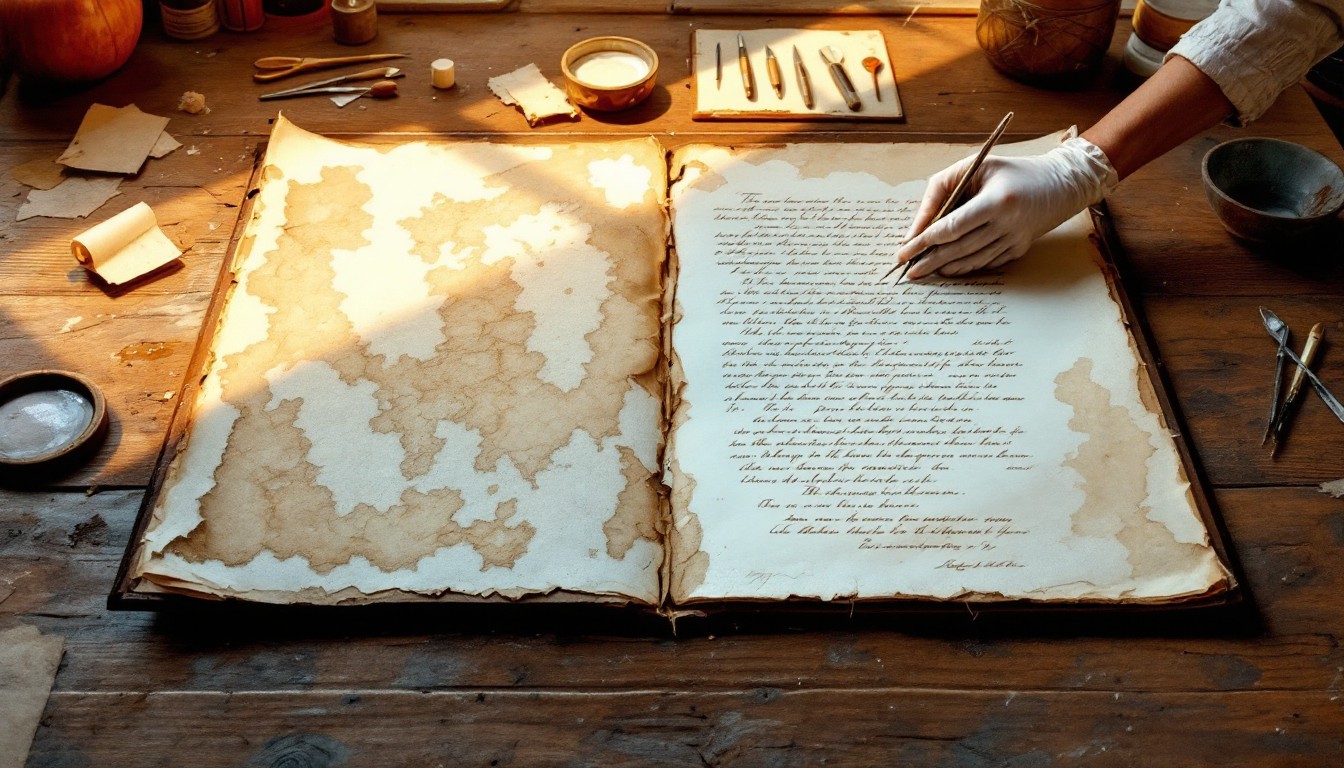
Beyond simple handwriting recognition, Scripily incorporates several document restoration features that are essential when working with damaged or degraded Latin manuscripts, and these features operate automatically before any AI model is ever applied to your images. Many historical documents have suffered from ink fade, where the original iron-gall ink has corroded the parchment and turned from dark brown to pale yellow over the centuries, making the text nearly invisible to the human eye. Others have been damaged by water, mold, or fire, leaving stains, holes, or charred edges that obscure individual characters. Still others have been written on palimpsests, where the original text was scraped off and written over, leaving faint traces of the earlier writing visible beneath the later layer. Scripily's image preprocessing pipeline includes automated contrast enhancement, binarization, and noise reduction algorithms that can often recover faded or obscured text before the recognition model even sees the image. For manuscripts with severe damage, the platform also offers an adaptive thresholding feature, which analyzes each region of the page separately and applies different enhancement parameters to dark text areas versus light marginal notes or stained sections. This is not a theoretical feature but a practical tool that has been used successfully on manuscripts ranging from a ninth-century Irish sacramentary with heavy water damage to a fourteenth-century English legal roll that had been partially burned in a fire. In cases where the physical document is too fragile to be scanned using a flatbed scanner, Scripily also supports processing of photographs taken under angled or uneven lighting, with built-in perspective correction and lighting equalization that can compensate for the curvature of bound manuscripts or the shadows cast by thick parchment edges.
Handling abbreviations intelligently without human intervention
Another major advantage of using a platform like Scripily is that the pre-trained models already know how to handle Latin abbreviations intelligently, and you can choose between two different output modes depending on your research needs without having to teach the model anything about abbreviations yourself. The diplomatic transcription mode preserves every abbreviation exactly as it appears in the original manuscript, including all suspension marks, contraction symbols, and specialized notarial signs. This mode is essential for paleographers who need to study scribal habits or for editors preparing critical editions that must represent the source document with absolute fidelity. The expanded transcription mode, by contrast, automatically expands common abbreviations into their full Latin forms based on context, and the model has been trained on enough varied material that it can make these decisions correctly the vast majority of the time. A simple example would be the abbreviation dñs, which the model recognizes as dominus when it appears in a legal document but as domnus when it appears in a monastic context referring to a religious superior. Similarly, the model knows that the abbreviation ihs appearing in a theological text almost always expands to Iesus, while the same sequence of letters in a medical manuscript might represent a completely different word. This expanded mode is transformative for researchers who want to perform full-text searches across large collections, because you cannot search for a word that has been represented by an abbreviation mark in the original. Once the transcriptions have been expanded, you can search for dominus across a hundred different manuscripts and find every instance regardless of whether the original scribe wrote it out fully, abbreviated it as dns, or used an even more compact form.
Specialized models for regional and unusual Latin traditions
For institutions or researchers working with specialized regional Latin traditions, Scripily offers pre-trained models that go far beyond the standard European scripts, and these models have been developed in collaboration with scholars who specialize in exactly these difficult materials. One particularly valuable example is the model trained on Latin manuscripts from colonial New Spain, covering documents produced in Mexico and Central America between the sixteenth and eighteenth centuries. These documents often mixed European Latin with indigenous place names and administrative vocabulary that never appears in European manuscripts, and local scribal practices evolved distinctive abbreviation systems and letterforms that can confuse generic European models. The New Spain model was trained on thousands of lines from actual colonial-era documents including church records, land grants, and inquisitorial proceedings, and it has learned to recognize the specific cursive hands used by notaries in Mexico City, Puebla, and Lima. Another specialized model exists for Latin manuscripts from the Kingdom of Hungary, where scribes often incorporated German and Slavic letterforms into their Latin writing, creating a hybrid script that defies easy categorization. There is even a model for Latin documents written in England during the Anglo-Saxon period, before the Norman Conquest introduced continental scripts, which recognizes the distinctive Insular minuscule that developed in Irish and English monasteries and which includes unique letterforms such as the Insular g and the rounded, island-specific version of s. All of these specialized models are ready to use immediately, requiring nothing from you beyond selecting the correct one from Scripily's public model library, and they demonstrate how far pre-trained AI has come in addressing the full diversity of Latin manuscript culture.
A simple workflow that requires no technical expertise
The practical workflow for transcribing a Latin manuscript using Scripily is straightforward and requires no technical expertise at all, making it accessible to undergraduate students, independent genealogists, and seasoned professors alike. You begin by creating a free account on the Scripily website, which gives you immediate access to the upload interface without any complicated setup or software installation. Your manuscript pages can be submitted as JPEG, PNG, TIFF, or PDF files, and you can upload individual pages or entire folders containing hundreds of images at once without having to rename or reorganize anything. Once the upload is complete, you navigate to the AI processing section and browse the public model library, where models are organized by century, script type, and geographical region to help you find the best match for your material. If you are uncertain which model to choose, Scripily offers a model recommendation feature that analyzes a sample page from your manuscript and suggests the three most likely models based on visual characteristics such as letter shape, line spacing, and abbreviation density, taking the guesswork out of the selection process. After selecting your model, you click the start recognition button and let the AI do its work while you attend to other tasks. A typical manuscript page takes between ten and thirty seconds to process depending on the complexity of the script and the size of the image, so a complete one-hundred-page codex might be fully transcribed in under an hour without you having to sit and watch it happen. When the processing is complete, Scripily displays the transcription in a side-by-side viewer, with the original manuscript image on the left and the machine-generated text on the right, aligned line by line for easy comparison. This viewer is fully interactive, allowing you to click on any line of text to compare it against the image, and to make corrections directly in the transcription panel whenever the AI has made an error.
Correcting the output without starting from scratch
Even the best pre-trained models are not perfect, and you should expect to spend some time correcting the output, but the amount of correction required is typically a small fraction of the time you would have spent transcribing from scratch, which is the entire point of using AI assistance. For most well-preserved manuscripts in standard scripts, a ninety to ninety-five percent character accuracy rate is typical, meaning that you only need to correct five to ten characters out of every hundred. Given that the alternative is typing every single character manually while constantly checking back and forth between image and text editor, the time savings are enormous. To make the correction process even more efficient, Scripily includes a confidence filter that highlights words or characters the model is uncertain about, allowing you to jump directly to the places where human judgment is most needed rather than scanning through every line looking for errors. When you do need to make a correction, you can simply click on the word and type the correct reading, and the interface will remember your correction for future processing of similar pages if you choose to enable that learning feature. For large collections where the same scribal quirks appear repeatedly, this means that your corrections on early pages can improve the quality of transcriptions on later pages without any formal model retraining. The platform also includes a built-in Latin spell checker that can flag words that do not conform to classical or medieval Latin orthography, which is particularly helpful when you are working quickly and might miss a misread letter that produces a non-existent word.
Collaboration and version control for team projects
For collaborative projects, Scripily supports shared collections with version control and annotation features, allowing multiple researchers to work on the same manuscript collection simultaneously without overwriting each other's corrections or losing track of who changed what. Every change is logged with a timestamp and user attribution, and you can revert to any previous version of any transcription with a single click, which provides peace of mind when experimenting with different model settings or correction strategies. The annotation system allows team members to leave notes on specific lines or words, flagging difficult readings for discussion, citing parallel manuscripts, or simply reminding themselves to verify a particular abbreviation against another source. This makes Scripily suitable not only for individual scholars working alone but also for large digitization projects involving teams of researchers, students, and volunteers spread across multiple institutions and countries. Project managers can assign specific sections of a manuscript to different team members, track progress through a dashboard that shows which pages have been transcribed, which have been corrected, and which are awaiting review, and generate reports on overall accuracy and throughput. For teaching environments, instructors can create classroom collections where each student is assigned a different page of the same manuscript, and then the instructor can review all of the corrected transcriptions in one place and compare them against a master edition.
Exporting your transcriptions in any format you need
When you have finished correcting your transcriptions, Scripily offers a wide range of export formats to ensure compatibility with other tools and platforms, so your work never gets locked into a proprietary system. You can export plain text for use in word processors or text analysis software, or CSV files for spreadsheet applications where you might want to analyze word frequencies or create concordances. For scholarly publishing, Scripily supports TEI XML, which is the standard encoding format for digital editions in the humanities, and this export automatically preserves line breaks, page breaks, and any editorial interventions you have made, along with the option to include the original abbreviation marks or expanded forms. You can also export searchable PDF files where the transcribed text is embedded as a hidden layer behind the original manuscript image, allowing you to search for words inside the PDF reader even though the image itself is just a picture of handwriting, which is ideal for sharing with colleagues who may not use Scripily themselves. For researchers working with IIIF-compatible digital libraries, Scripily can generate annotation manifests that link your transcriptions directly to the images stored in institutional repositories, without requiring you to re-upload anything. This means that if a library has already made high-resolution scans of its Latin manuscripts available through a IIIF server, you can transcribe those manuscripts inside Scripily and then export the transcriptions as annotations that sit on top of the library's own images, creating a public digital edition that lives on the library's infrastructure rather than on your local hard drive.
What AI can and cannot do for Latin manuscript research
The question that many researchers ask is whether AI can ever replace the careful judgment of a trained paleographer, and the honest answer is no, nor is it intended to, but that does not diminish its value as a research tool. What AI provides is an initial draft that is accurate enough to save months or years of manual labor, leaving you free to focus on the interpretive and editorial work that only a human can do. You still need to understand Latin grammar to correct the AI's mistakes, and you still need paleographic knowledge to resolve ambiguous readings when the manuscript is damaged or the scribe's hand is unusual. You still need to make editorial decisions about how to handle variant spellings, whether to expand abbreviations in a particular way, and how to represent damaged or illegible text. But instead of spending your time typing out lines of text that are perfectly legible and routine, you can spend your time wrestling with the genuinely difficult passages, the damaged sections, the unusual abbreviations, and the interpretive questions that actually require your expertise. A researcher who once needed six months to transcribe a single medieval cartulary can now complete the same task in two weeks, leaving the remaining five and a half months for analysis, interpretation, and writing rather than mechanical transcription. A graduate student who previously had to choose between transcribing sources and analyzing them now no longer has to make that choice, because the AI handles the transcription well enough that the student can move directly to analysis. An archive that lacked the staff to create digital editions of its Latin holdings can now process hundreds of manuscripts per year using the same human resources, dramatically increasing the accessibility of their collections.
Getting started with Scripily for your own Latin manuscripts
For those who are ready to begin, getting started with Scripily requires nothing more than a web browser and a few sample pages to test, and the barrier to entry is intentionally as low as possible. The free tier allows you to transcribe up to fifty pages at no cost and with no credit card required, which is more than enough to evaluate the quality of the pre-trained models on your specific material and to decide whether the platform meets your needs before you commit any money. If you have a large collection, subscription plans are available that provide unlimited transcription along with priority processing and access to the full library of specialized models, with discounts for students, educators, and non-profit archives. Technical support is available for researchers who need help selecting the right model or who have unusual manuscripts that may require special handling, and the support team includes people with paleographic training who understand the specific challenges of Latin manuscripts rather than generic tech support agents. Because Scripily works entirely in the cloud, you can access your transcriptions from any device anywhere in the world, collaborate with colleagues across continents, and never worry about losing your work to a hard drive failure or a forgotten backup. The age of Latin manuscripts being locked away behind the barrier of handwriting is finally coming to an end, and artificial intelligence is the key that is opening that door for scholars, students, genealogists, and anyone else who has ever wanted to read the words written by scribes a thousand years ago. What will you discover when you can finally read everything in your archive without spending years learning paleography first?